Success comes in many forms. It’s not just startups conquering markets with innovative ideas but also individuals – entrepreneurs, scientists, students, and philanthropists – who decide to change the world around them. Sometimes a bold idea is enough, other times it takes years of perseverance. What they all share, however, is this: they don’t give up, they look for new paths, and their efforts expand the boundaries of what’s possible.
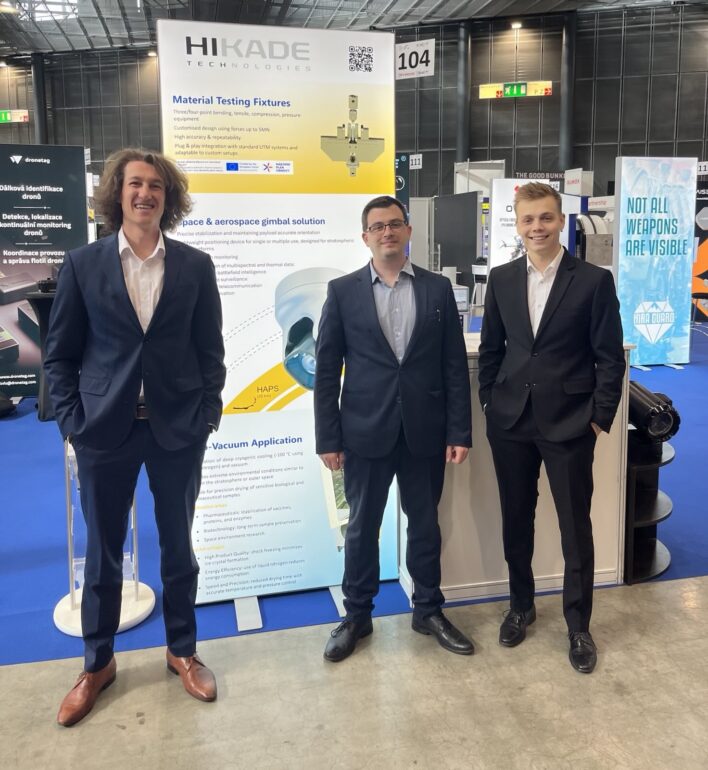
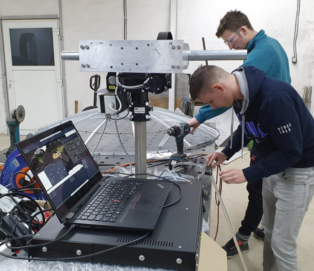
A young tech company from Brno, Hikade Technologies, develops advanced mechatronic systems for extreme environments, combining top-tier engineering with sustainability. The project is led by Tomáš Hikade, who together with his team and without external investors built both the technology and their own testing facility from scratch. Today we speak with Tomáš about their journey, challenges, and future visions.
Hello, Tomáš. Thank you for joining us. Let’s start at the beginning. Do you remember the very first spark that led you to pursue space technologies?
“Thank you for inviting me. I remember it clearly. It happened while working on the Zero G project for the European Space Agency when I was employed at Sobriety. I was fascinated to be part of technologies that have real impact on cutting-edge research. The need for stratospheric solutions came to us more by chance, via a complex route, but that’s when I saw the tremendous potential for sustainable and innovative technologies. Our goal is to liberate the overcrowded Earth orbit.”
What was your biggest motivation when founding the company?
“My biggest motivation was freedom, to pursue top-level research in my own way. We’re self-funded, with no investors, which means we earn our operating budget through contract development. Often, that means delivering not just a design but a fully functional device. It’s a big responsibility, but it also gives us the freedom to finance our own ideas. For example, we developed the Patron gimbal for HAPS platforms over two years entirely from company profits.”
The journey from idea to real product is often full of unexpected turns. Did you have any ‘aha’ moments during the development?
“Yes, there were several, but two stand out. The first hit when we approached major American and European HAPS platform manufacturers and to our surprise they responded very positively. Not only were they interested but some even offered technical mentoring. That was a powerful moment. We realized that what we’re doing has international significance. The second ‘aha’ moment came out of necessity. To save costs, we built our own cryovacuum chamber. Not only did we succeed but we also discovered new possibilities to extend its use in other projects. The result is our Cryolyze lyophilizer, which we are now developing with support from ESA Spark.”
You’ve also planned to integrate and assemble COTS products in a cleanroom environment comparable to a flowbox, in collaboration with a university. All designs are intended to be cost and energy efficient to minimize environmental impact. This reflects your goal of creating innovative solutions with strong market potential. What has been the biggest challenge in building Hikade Technologies, and how did you overcome it?
“The greatest challenge – and what remains – is building a quality team on a minimal budget. A company is only as strong as its people, and without the right team around me I might have already stopped. I want to especially thank two key members – Marek Melichar and David Nevřivý – who are, without exaggeration, my right and left hand. Thanks to them, this has real meaning and direction.”
This year your company joined the ESA BIC Czech Republic incubator and received support from Technological Incubation. Could you tell us more about the Patron project you’re now able to develop further?
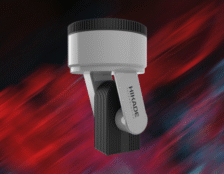
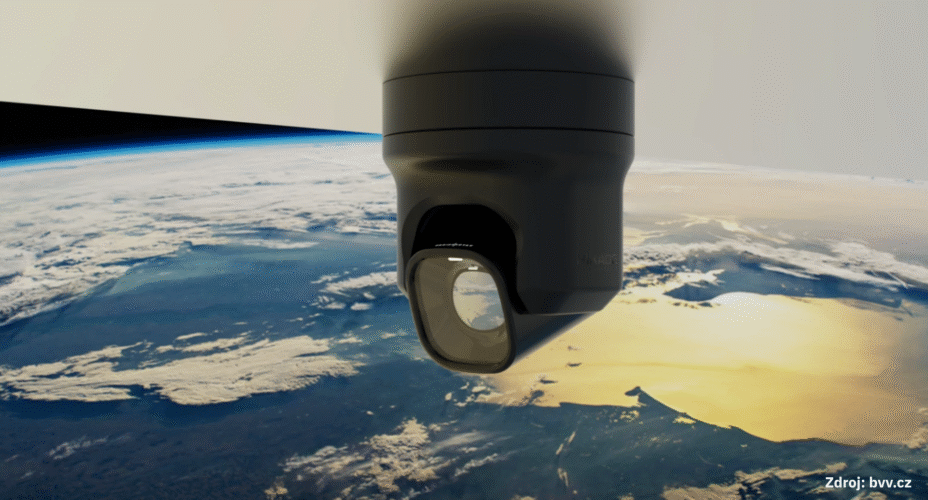
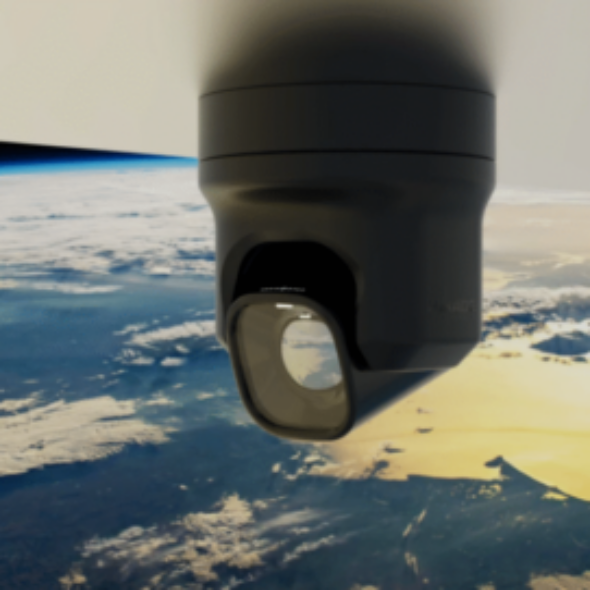
“Patron is a stabilization gimbal designed specifically for HAPS platforms. Its main purpose is to ensure precise, stable targeting of specific areas on Earth from altitudes of 15 to 20 km, where even tiny deviations are highly visible. The stratospheric environment is extremely harsh, with temperatures from –80 °C to +80 °C and atmospheric pressure around 3 kPa. With the backing of ESA BIC and Technological Incubation, we can continue developing Patron and prepare it for real-world deployment.”
“The gimbal is fully modular and designed for low weight, low power consumption, and high mechanical precision. What makes it unique is its ability to perform stabilization and precise tracking from 20 km altitude, an environment many standard gimbals aren’t built for. Unlike space-specific systems meant for one-time use, Patron is designed to be fully reusable for repeated stratospheric missions.”
What are you most proud of in your journey so far?
“I’m most proud that, despite all challenges and tough moments, I have the right people around me. My wife has been an incredible support and motivation to keep going. And of course, my team. We continue to grow and I’ve managed to keep top experts with the same passion and determination. It wouldn’t have been possible without them.”
If you could send a message to your younger entrepreneurial self at the start of this journey, what would you say?
“I’d tell myself to be patient and not give up, even when beginnings are complicated and tough. Success comes gradually, step by step. I like Marcus Aurelius’s quote: ‘Everything that begins is small.’”